 Tweet
Tweet Facebook
 WhatsApp
 Telegram
In the event of damage to the human or animal body, the body will produce new tissues. In some cases, the repaired body tissue cannot exhibit the same performance as the old tissue. Or it may not visually have the same appearance as the old tissue.
Tissue damage can occur not only on the outer surface of the body but also in the internal organs and mucosa.
Resulting wound tissues can damage other tissues of the body. As a result, hyperkeratosis and irregular tissue proliferation occur.
Therefore, it is necessary to prevent these wounds from damaging other tissues and to treat them quickly. For this purpose, a moist environment that benefits the treatment must be created in the area where the wounds are located. For this reason, products such as hydrogel have been developed and applied in the treatment of wounds.
What is the Working Principle of Hydrogel Production?
It has been determined that occurring wounds or tissue damage heal faster in moist environments. If the environment where the wounds are located is dry, it causes the repaired tissues to die again. At the same time, amino acids and electrolytes play an important role in the repair of tissues.
Wound healing environments in moist form provide better physiological environments for new cell growth.
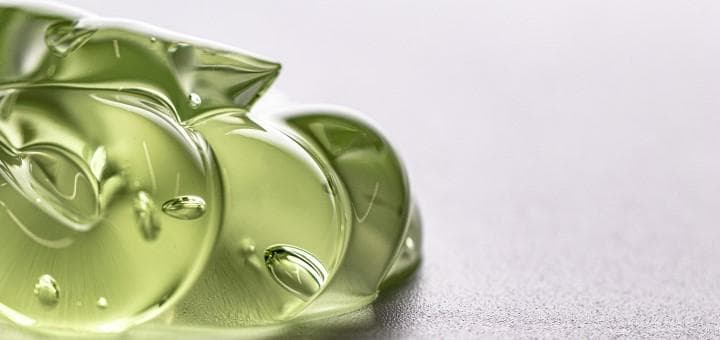
For wound healing, first, the liquid form within the wound must be optimized with appropriate treatment agents. Then, a topical gel is formed in the wound dressing to create a moist environment that will come into contact with this wound. This composition is called hydrogel. This hydrogel can release fluid to the wound over time. Therefore, it can act as a fluid stock buffer for the wound.
Gelling agents used in wound healing previously included carboxymethyl cellulose, sodium alginate, and starch. But according to new inventions, the most preferred gelling agents are selected from the Carbomer 940 and Carbomer 980 series.
In this way, high viscosity is obtained by using lower Carbomer.
What are the Substances Used in Hydrogel Production?
The most important substances used in hydrogel production are the active substance and the gelling agent. Povidone-Iodine is used as the active substance. In addition, individuals with knowledge and experience in this field can use alternative active substances that can substitute for PVP Iodine.
Other substances used are as follows.
- Carbomer 940 (USP)
- Water
- Sodium Hydroxide (Caustic Soda Flakes)
- Disodium Phosphate (Na2(HPO4))
- Citric Acid Anhydrous or Citric Acid Monohydrate
Formulation Example:
Water: 80-90%
Propylene Glycol: 1-3% (optional, as a humectant)
Carbomer: 0.1-0.5% (to increase the consistency of the gel)
Hydrogels used in the treatment of wounds are gel formulations with high water content, possessing moisturizing and wound-healing properties. Hydrogels provide a moist environment by moisturizing the wound surface, helping the wound to be cleaned and to heal.