 Tweet
Tweet Facebook
 WhatsApp
 Telegram
Physical changes occur in human skin due to various reasons. Issues such as acne formations, wrinkles, hyperpigmentation, keratinization disorders, and psoriasis are among the most significant ones.
Retinoic Acid is known as a Vitamin A ester with 13 double bonds and both trans and cis forms. Retinoic Acid does not dissolve in water. Methylene Chloride dissolves in it. It has a moderate solubility in ethyl alcohol and ether. It is a chemical sensitive to air, heat, and temperature.
Trans Retinoic Acid normalizes acroinfundibulum keratinization and is used in the following applications because it promotes comedolysis.
It is applied topically, especially in the treatment of Acne Vulgaris, Comedonal Acne, and Papulo-Pustular Acne.
In addition, retinoic acid performs various biological actions due to its ability to induce neoangiogenesis and collagen fiber synthesis by providing an increase in keratinocyte turnover in the treatment of photoaging. As a result of many scientific studies, it has been proven that there is an improvement and reduction in the histological changes of photoaging due to the use of tretinoin.
Uses of Tretinoin between 3 and 6 months exhibit clinical improvements in skin wrinkles and skin dyschromias.
Retinoic Acid is used between 2% and 3% by weight or volume in such topical formulas. Among the primary reasons for using such a low amount is that it cannot be added stably at high concentrations to the resulting formula in a short period. Toxicity is also among these disadvantages.
What are the Advantages of the Resulting Mask?
- It provides very good control and ease of application over the skin areas to be treated.
- Not having toxic properties due to its Polyvinyl Alcohol content.
- It prevents the occurrence of skin irritation by assisting in the appropriate dose release within a 20-minute period.
What is the Purpose of the Produced Vinyl Mask?
- It prevents skin aging by reducing pigmentations, actinic keratoses, wrinkles, and striae distensae, whether induced in the presence of light or not.
- It ensures the treatment of dermatological conditions caused by keratinization disorders (Acnes, Ichthyoses, Keratoses, Psoriasis, and Dermatitis).
- It helps in the treatment of epidermal and dermal proliferations (Warts).
- Used in the treatment of blisters and dermatoses. Mask application is spread in a circular manner from the center outwards. And it must remain on the application area for 30 minutes.
Mask Components Produced for Skin Treatment are as Follows
- Water
- Disodium EDTA
- Imidazolidinyl Urea
- C10-30 Alkyl Acrylate Crosspolymer
- Polyvinyl Alcohol (PVA)
- Mono Propylene Glycol USP
- Retinoic Acid (Tretinoin)
- Octyldodecyl Octyldodecanoate
- Denatured Ethyl Alcohol
- Salicylic Acid
Preparation and Application of Phases While Producing the Skin Mask
The production of components containing Retinoic Acid and the merging of phases during this production process is a somewhat difficult task. The most significant problem here is that Retinoic Acid tends to precipitate in microcrystalline form within a short period.
The amount of Retinoic Acid in the solution being at a level of 2.5% will help in obtaining a solution healthily. A skin mask with this concentration of retinoic acid does not cause toxicity or skin irritation and is also easily absorbed by the skin.
Trans Retinoic Acid does not dissolve in water. However, it has good solubility in Isopropyl Alcohol.
The ratio between Trans Retinoic Acid and Octyldodecyl Octyldodecanoate should be 1:4 or 1:8.
Polyvinyl Alcohol (PVA) is used as a gelling agent in the range of 5% to 15%.
First, Disodium EDTA, Acrylates, Mono Propylene Glycol USP, and Polyvinyl Alcohol are prepared in a production solution in a vessel up to a temperature of 70°C.
In another vessel, Octyldodecyl Octyldodecanoate is heated up to 40°C. Then, Retinoic Acid is added to this phase and mixed to achieve a homogeneous form.
Subsequently, the second obtained phase is slowly added to the first obtained phase in a stirred vessel.
Then, first salicylic acid previously dissolved in ethyl alcohol and then imidazolidinyl dissolved in water are added to this mixture.
Finally, the resulting compound is stirred until the desired viscosity is reached.
Physical and Chemical Properties of the Resulting Mask Gel
The pH of the resulting composition is in the range of 3.5-4.5.
Viscosity is 15000-25000 mPas.
Density is between 0.97-1.01 g/ml.
Retinoic Acid content is 2.25 g-2.75 g.
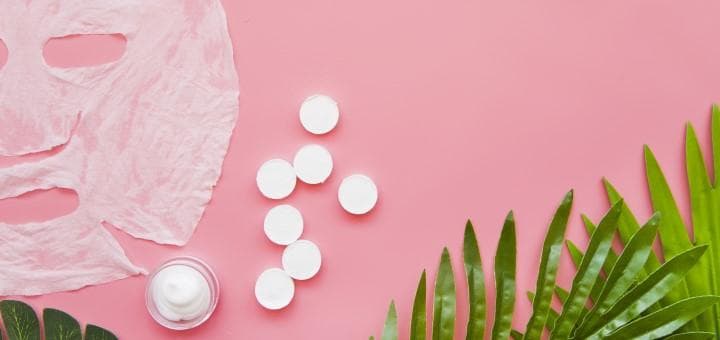
Retinoic acid face mask is a cosmetic product used to promote cell renewal in the skin and correct skin tone. Retinoic acid is one of the derivatives of Vitamin A and supports healthy skin renewal. Face masks usually come with moisturizers, antioxidants, and other skin care ingredients in addition to retinoic acid.